Gumtown’s results of 58 ms for low E and 35 for high e for triggering internal sounds indicate the latency is higher than all of Roland products. Are you calling out Gumtown’s results? Maybe he should do more tests?
I’ve already done all these GM-800 latency tests, and they were here for people to see before I took them down. They got a lot of backlash from the fanboys. I measured pitch to midi and pitch to internal audio. Depending on which patch you choose, the internal audio can trigger faster on certain sounds. Elantric thought the internal triggering was faster than the pitch to midi triggering, but I showed him it was not."
apparently there are some missing posts, but this should suffice. i don’t know how the gk-5 works its ‘magic’, but if it is doing a/d then it must be introducing at least a small amount of latency when compared to a gk2/3.
the last time i did comparison tests of 1/4” output vs mg3hex i think was getting 28msec on the low E string.
are you measuring your 1/4” output vs the roland gear? it’s not a fair test if you’re comparing the summed signal from the vg/gm/mg etc.
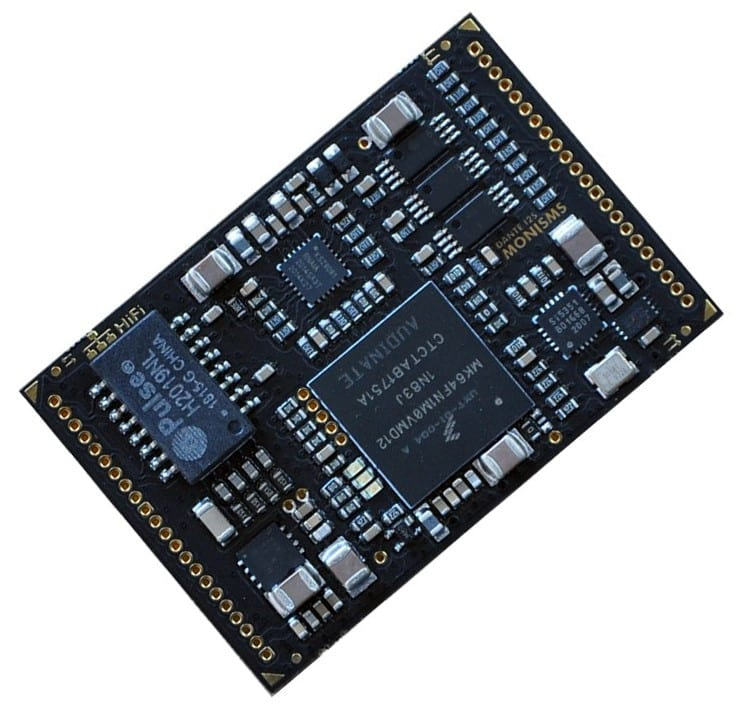
my best low latency setup so far is the dante ethernet based option. using ethernet gets me down to the low 20’s. ethernet devices don’t have to compete for usb processing, mine is set to 2msec and never glitches.
I guess you wouldn’t be posing this question unless you thought the answer was unequivocally “no.”
Please understand, my "Do yourself a favour … " comment was intended as guidance to get you across the line (economically and quickly) so you can actually experience MG3 Hex rather than just pondering its existence.
>>The audio interface I used has an input latency of 2 ms., so 2 ms. would be added to those figures.
if your numbers aren’t end to end then i don’t really think you’re comparing apples to apples.
i’ll re run my mg3 tests to confirm that my results are better than what you are reporting.
just to confirm, you are saying that you see > 30msec in mg3 (hex?) on the low E string?
roland did themselves in. remember all those times you paid $130 for a $25 cable? all those times they promised ‘it’ll be fixed in the next firmware’.
all they are doing is milking their reputation. they stopped innovating decades ago and are simply coasting on autopilot with a heavy dose of selling you their cloud.
if they were interested in innovation we’d have optical gk pickups by now, rather than a hack like the gk-5 (can’t connect it to any of your old roland gear without forking over another $250 for the privilege).
all you have to do is tell me WHY it is innovative.
is it faster? more accurate?
i’ve never seen anyone answer this question.
i see you withdraw as soon as you are asked to put up any real numbers. are you not sure? maybe mg3 is faster? give us the numbers you’re working from. put up, as they say.
The A/D conversion takes place in the microsecond range and applies to both GK5 and GK2/3, once already in the pickup and in the latter still in the synthesizer unit before the USB output. If you use a break-out cable it will happen in the mixer.
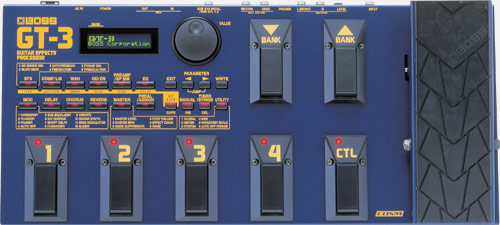
The GT3 kit will likely be omitted. Am looking at balanced signals from custom wound coils per string so each low to high string (due to different string thickness) are read more consistently.
Hi @syzinteg, I wouldn’t rely solely on gk2/3 pickups, but would also include all other pickups in the circuit design.
That’s why I wouldn’t use Roland’s mini board with +7V and -7V, but would develop something better and more universal myself.
The most widely accepted solution would probably be one that fits into the size of a guitar or bass battery compartment and also supplies power to the instrument’s existing active tone control, if applicable.
It is of course possible to use USB for audio applications, provided that the appropriate filters in the circuit provide a clean power supply without spikes or digital artifacts.
With hex pickups, I don’t think speed is really the main issue, since a few years ago. The competition seems to work . But there are certainly other aspects that are important to account for, such as spurious and missed notes, dynamics and responsiveness to low dynamics (left hand) playing.
Anyways, just wanted to add that the next update will arrive with a new tracking model that should be interesting for you guys.

 . But there are certainly other aspects that are important to account for, such as spurious and missed notes, dynamics and responsiveness to low dynamics (left hand) playing.