I’ve been working really hard on this one, but sadly, I’ve hit a wall with latency adjustments. Trying to tighten driver performance results in audio instability that, in my opinion, renders it not ready for release.
But I’m not giving up yet; I’m just going back to the drawing board with some important lessons learned, and some very valuable data benchmarks to back the version 2 prototype. I’ll keep you guys posted on any notable developments.
In the meantime, if there are any Australia-based forum members who have a BOSS hex USB device (GP-10, GM-800, VG-800) that they’d be prepared to temporarily lend to me for research purposes, I’d be very appreciative! P.M. me
I think I was unnecessarily pessimistic in my last post. I was expecting latency optimization to take weeks, considering all the troubles I’ve had with it, but some focused work today has produced some very promising results and I now have extremely stable performance/measurements:
128 → 12.9 ms
64 → 10.2 ms
32 → 8.9 ms
I could maybe shave a bit more off, but life is short…
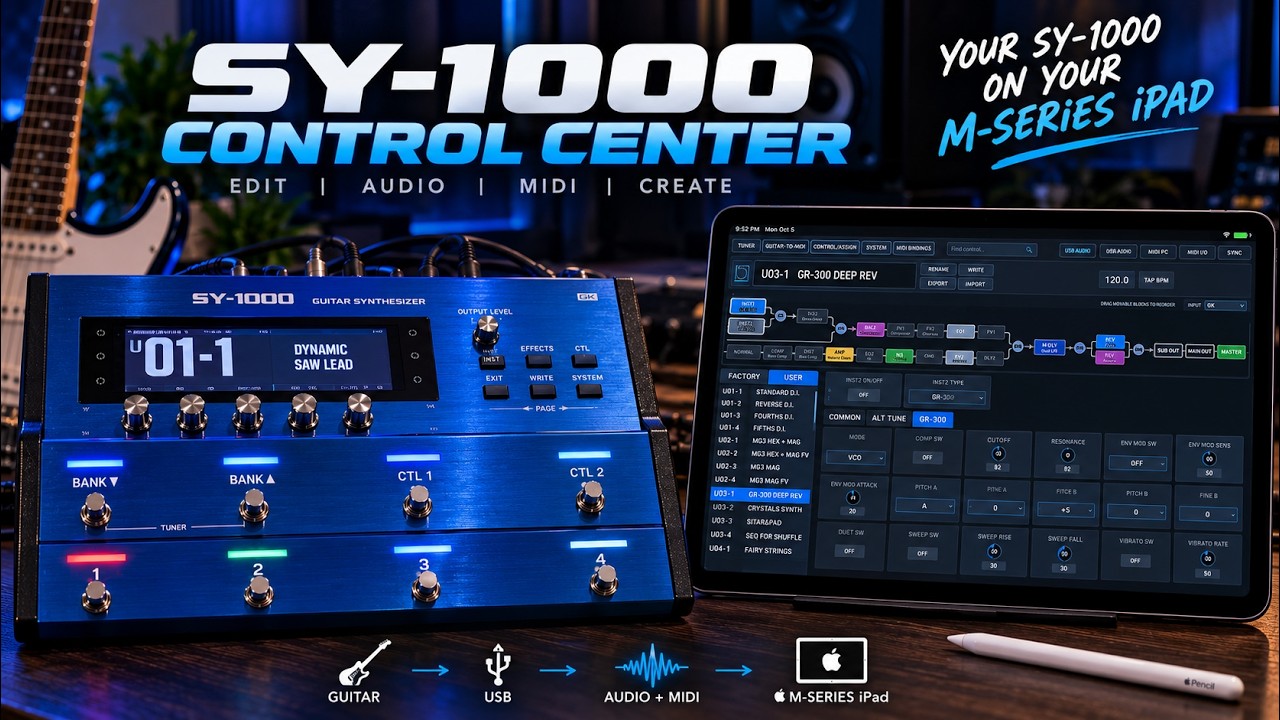
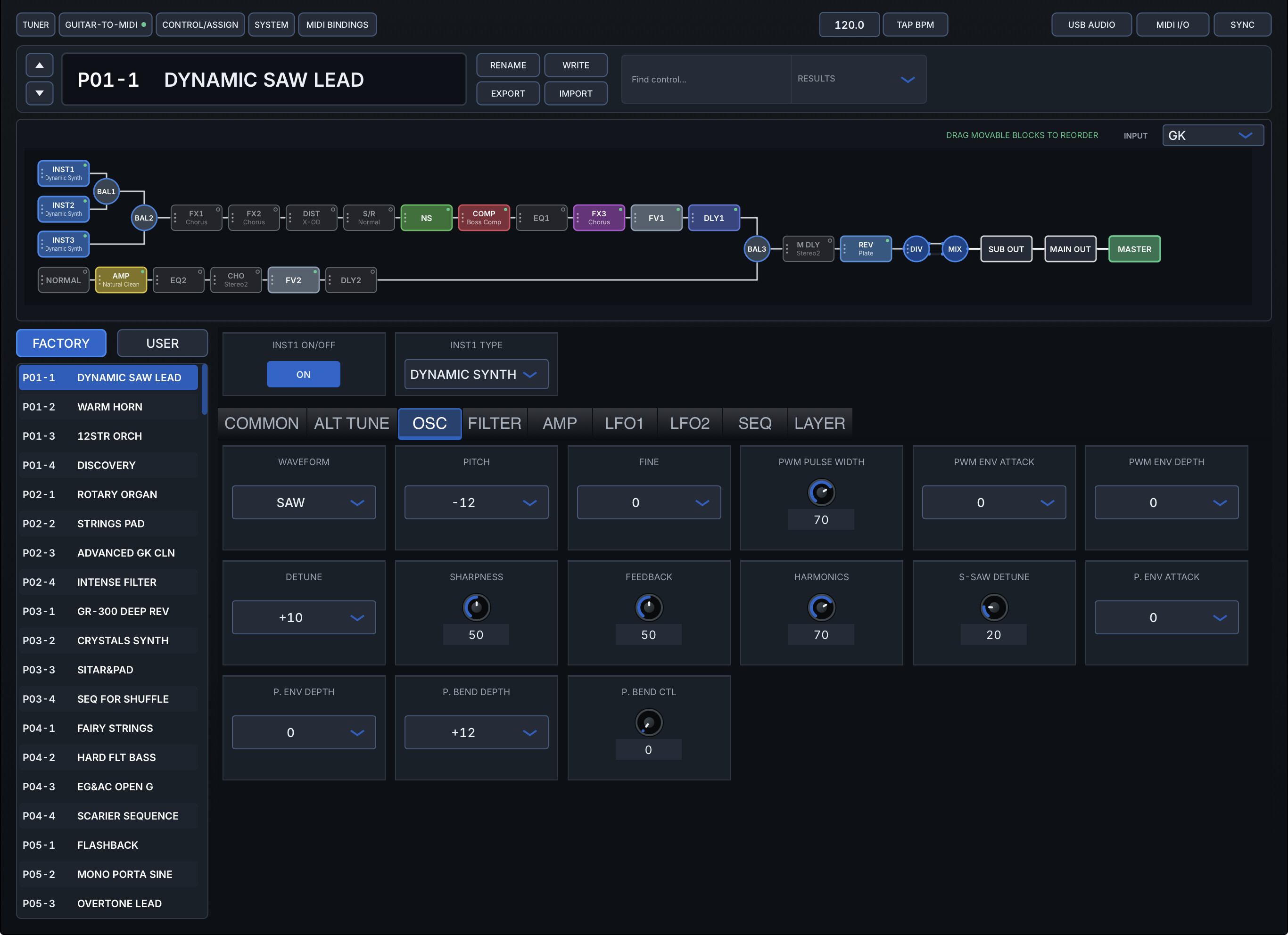
Also, SY-1000 Control Center for iPadOS is now functional. Today has been a good day at the computer
Thanks! Those numbers are actually measured round-trip latency (RTL), not just the nominal latency reported by the driver.
I tested by sending an impulse from the iPad through the SY-1000’s USB output, physically looping the SY-1000’s analog output back into its analog input, and recording the returned signal over USB. I then measured the sample offset between the transmitted impulse and the returned impulse at 48 kHz.
The stable measured RTL results are:
128 samples → 620 samples / 12.9 ms
64 samples → 491 samples / 10.2 ms
32 samples → 428 samples / 8.9 ms
So those figures include the complete path: iPad/driver → USB → SY-1000 hardware/DAC → analog loopback → SY-1000 ADC → USB → iPad/driver.
That means they include the SY-1000’s own conversion/hardware latency as well as the USB/driver buffering. I haven’t isolated the hardware contribution from the driver contribution yet, but the figures above are the actual end-to-end RTL that an audio application sees.
Some annoying issues persist. Like, I can’t make the SY’s audio ports expose as USB. AUM thinks they’re Thunderbolt! I followed the guidance to “fix” that, and it just breaks the driver! So “TB” it is…