This is too good not to share…I think MG3 Hex users will find it interesting.
Recently, I’ve been working on the problem of hex access via BOSS devices on iPadOS. BOSS was not kind enough to provide us with any advanced audio-MIDI connection solution for the popular mobile platform.
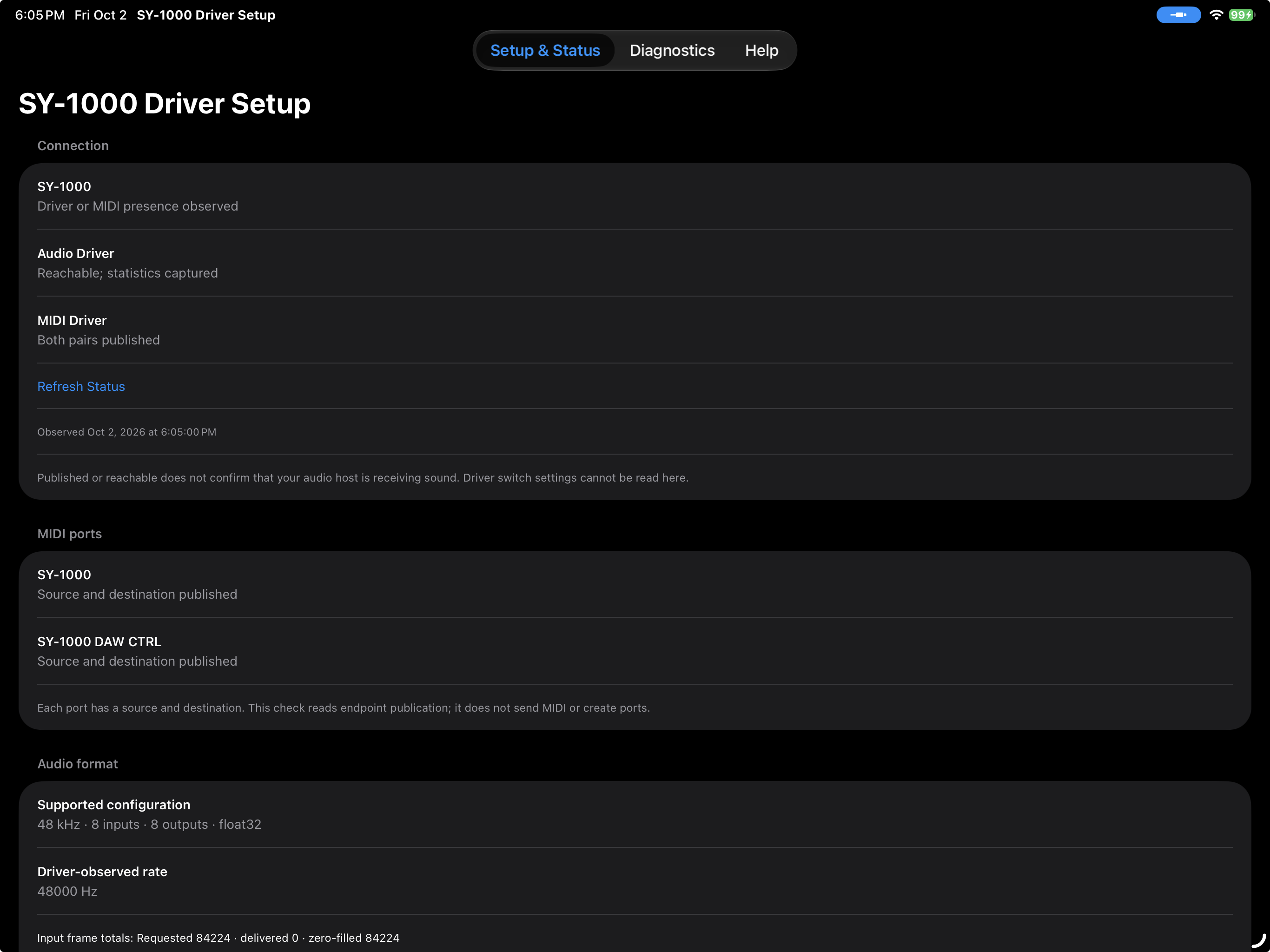
I have built a functional (albeit incomplete) custom driver to connect the BOSS SY-1000 over USB to an M-series iPad. Unfortunately, it doesn’t work with pre-M-series iPads.
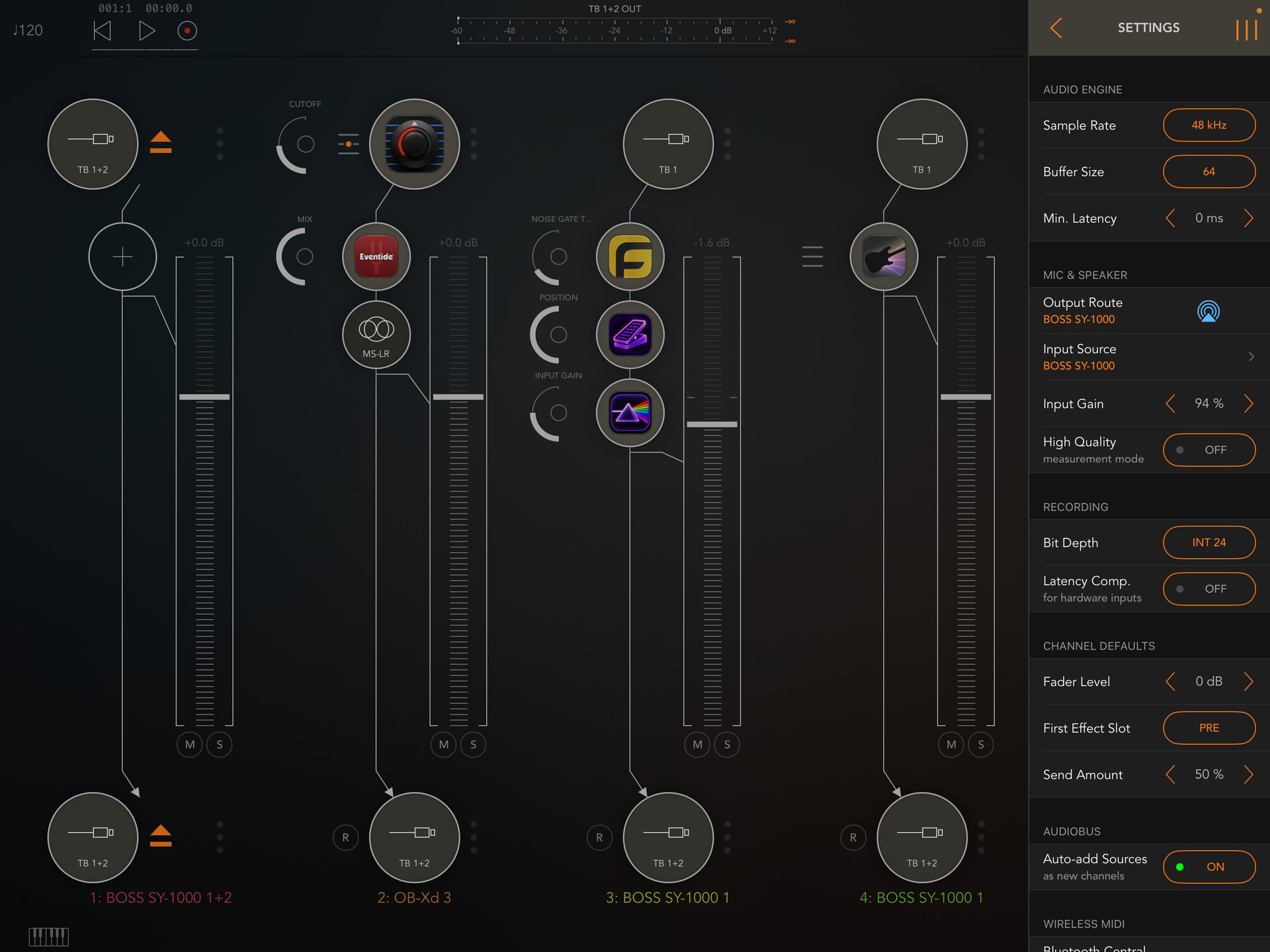
There are still bugs to iron out – driver packaging, latency (EDIT: already vastly improved to highly playable state since posting), stereo-only output (will eventually have 8 in/8outs for full re-amping/re-synthing access), 48kHz-only operation, possible legal issues, etc.
Anyway, just wanted to share this personal development in the hex space.
The really nice thing is that the same approach used for the SY-1000 should apply to GP-10, GM-800, and VG-800 with some per-device tweaking. Unfortunately, I only have the SY-1000 now, or I would have already made the full suite.
I’ve just resumed work on the HexBox project and am in the process of ordering the first prototype PCB. Your development likely makes it redundant. I’d be happy to help with testing using the GP-10, GM-800, and VG-800.
Thanks Based on what I’ve read about your product, I think it would still have excellent use cases. Firstly, this driver only works on M-series iPads. Secondly, your hardware should enable direct connection and negate the BOSS hardware requirement. I think they’re both big deals. There are probably more reasons why it would be very useful that I can’t think of right now.
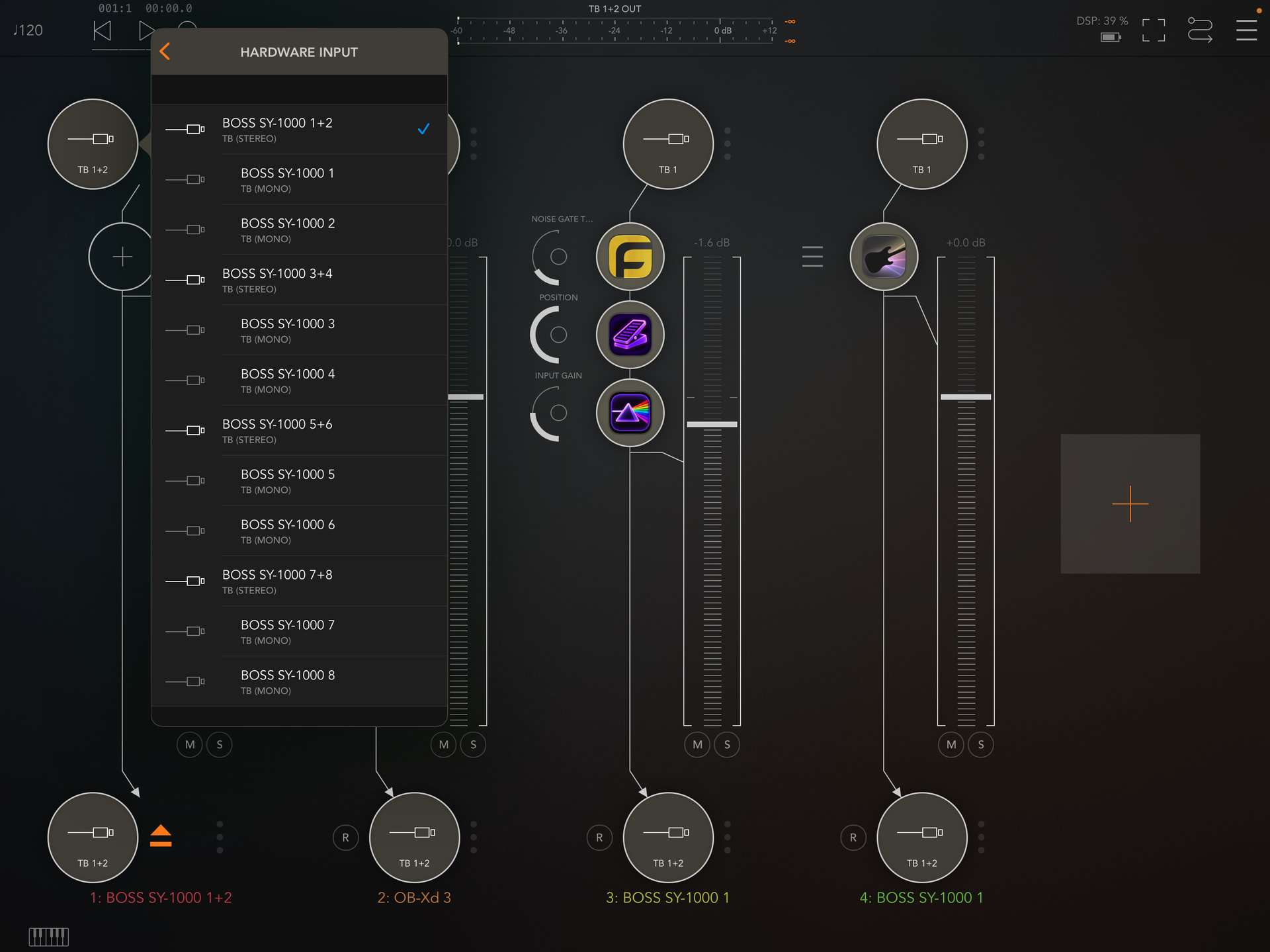
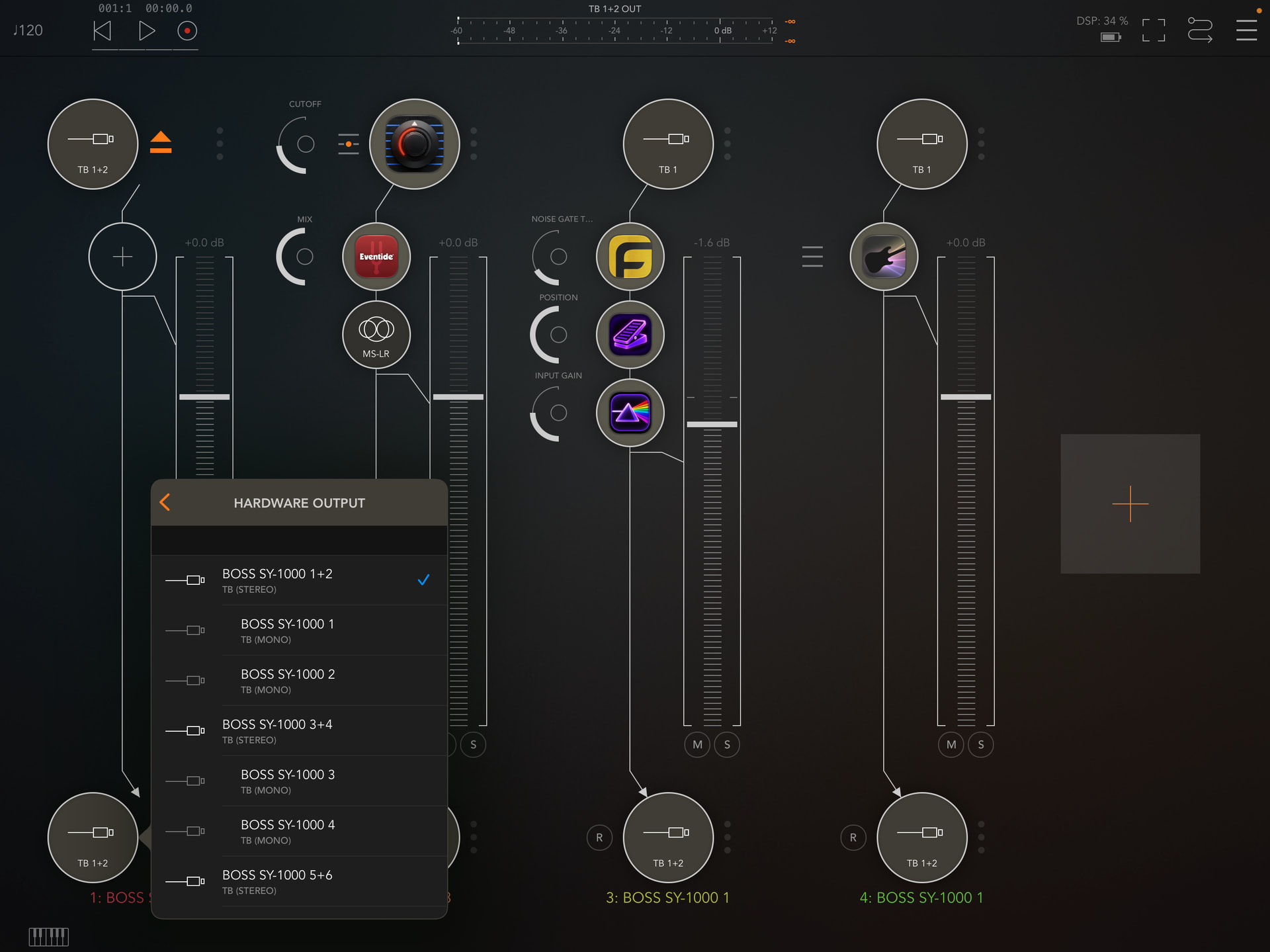
It’s working perfectly in AUM and an added benefit is simply having access to a good D.I. from the SY-1000 for basic guitar chains and MG3 Standard.
I’m about to add MIDI over USB next and then I’ll try to shave down the latency a little more. Currently, it’s completely playable, but I just feel that it could go a wee bit lower.
Of course, this kind of experimental work often uncovers bugs, and I’ve found a couple of niggling issues with MIDI Guitar 3 for iOS in hex mode, but I would stress to users that these are not criticisms, rather they are observations. Hex on iPadOS is already an extreme niche – though hopefully after I get this driver out into the world that will be less of the case. So, these points are mostly for the consideration of @JamO.
Firstly, in MG3 standalone, I’m getting the occasional messages about an “audio hiccup,” and sometimes presets won’t load their content until I mess around with the audio settings, reset things, like the buffer. I can’t put my finger on exactly why this is happening, but the driver works most of the time.
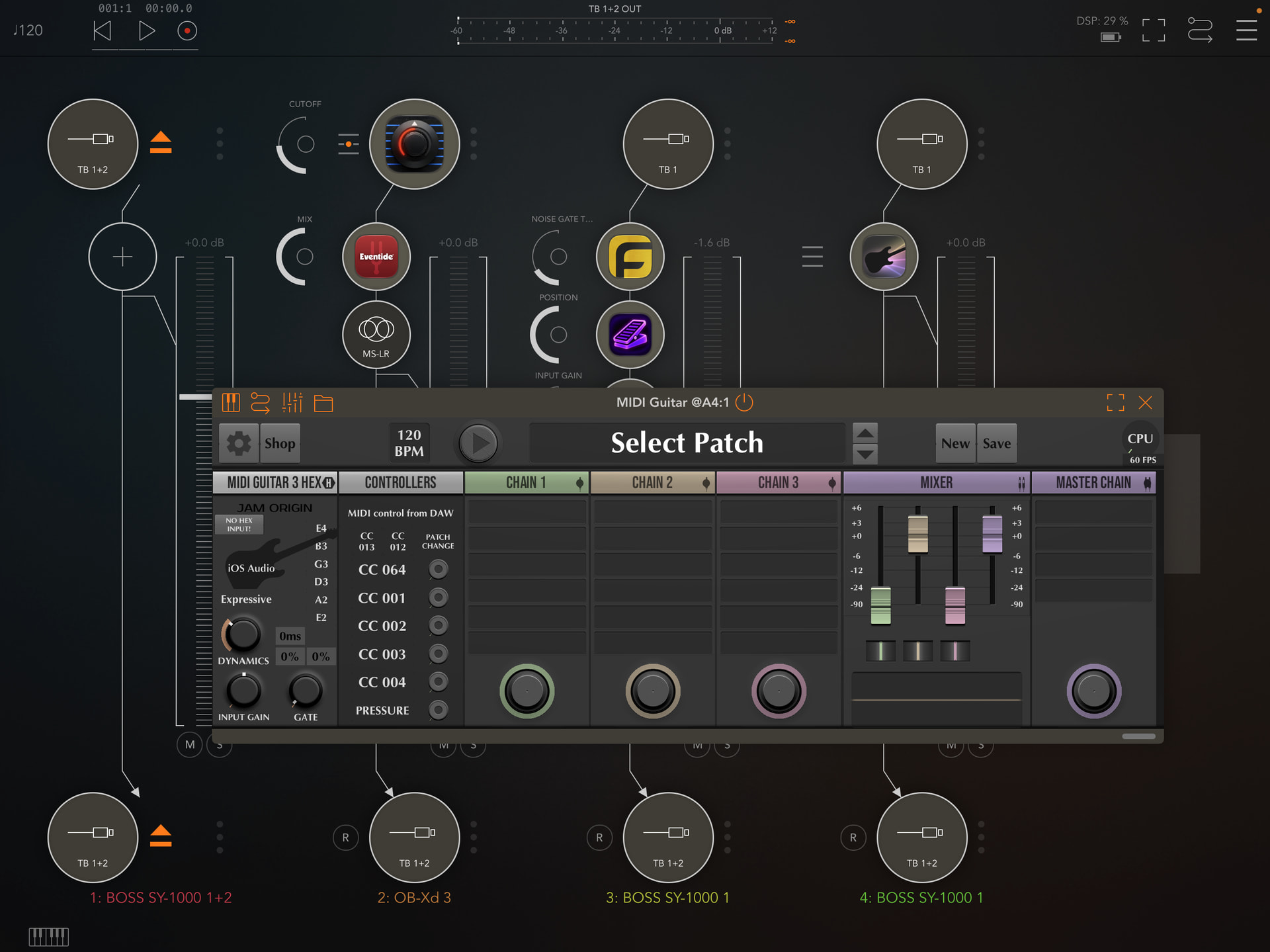
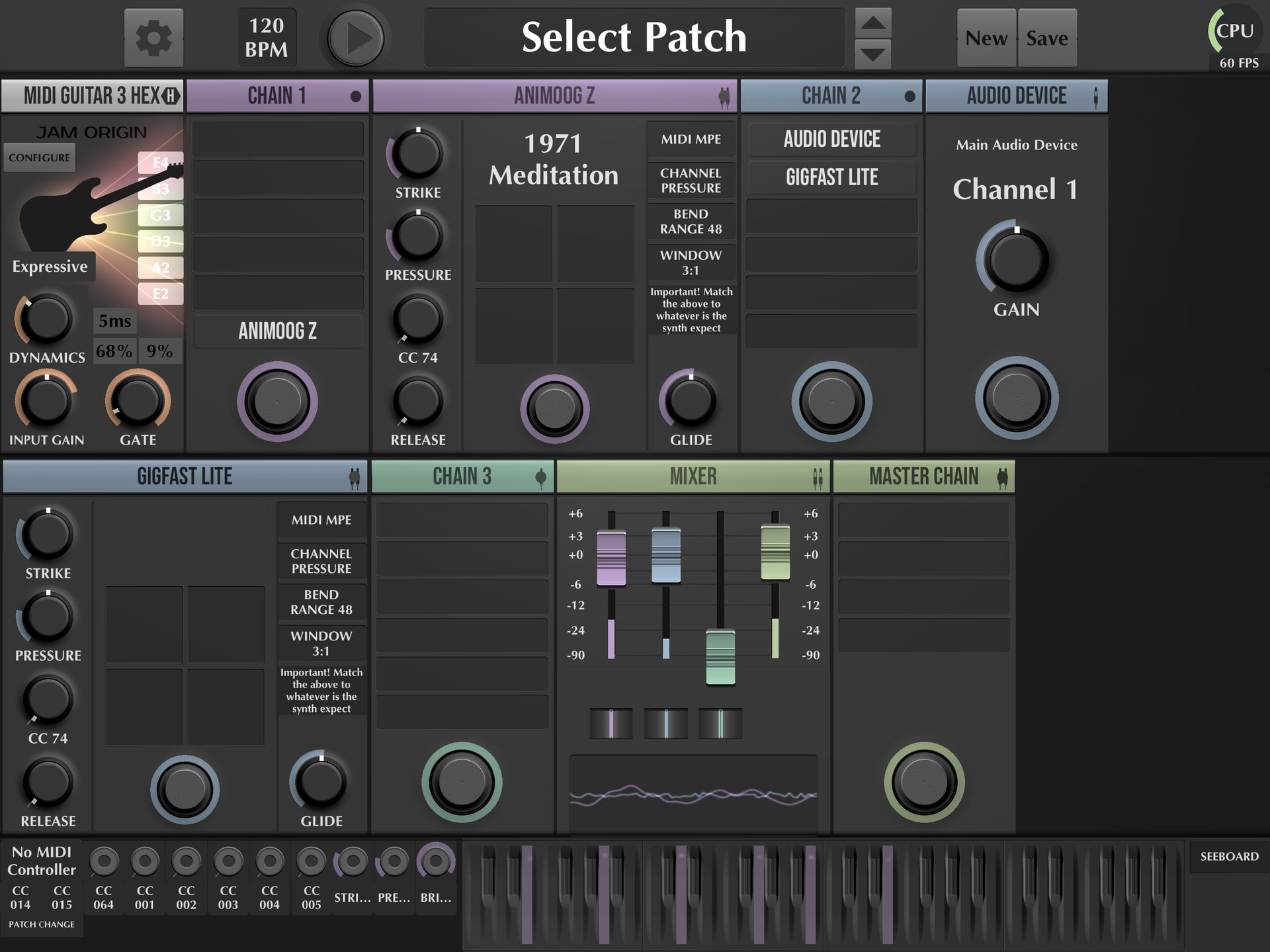
Secondly, and I’m not really sure if this is to be expected or not, the MG3 AUV3 doesn’t accept the 8 inputs when selecting iOS Audio rather than Audio from DAW. As you can see in the screenshot, there is no hex input! This moves hex functionality squarely into the standalone application only. Considering the amount of work I’ve done on this kind of processing and the macOS and iOS platforms, I should know if it’s possible or not enable, but I haven’t quite dug in enough to find the definitive answer yet. That said, I suspect that it may be possible to enable this.
I believe on iPadOS, it’s still only possible to access one audio interface(?) - the one picked in the iPad control center. So I assume you new driver is somehow selected there.
Now regardless of what MG tries to do, iPadOS will get us that one audio device. Which in turn will also be the audio device that AUM is getting. So, I would think MG AUv3 “iOS Audio” would get the same audio configuration as AUM is running. Or maybe there is something like “exclusive” mode where one App takes over audio and others can’t get it?
There’s only ever one interface available systemwide at any given time. So I had assumed that MG3 (AUv3) in a host would also have access to the same device. If I’m using the 8-in/8-out SY-1000, all internals are available to AUM. But those same channels are not immediately available to the plug-in.
I reported recently that there was an issue getting the previous iOS version of MG3 to register any mono input other than channel 1. So I thought this may be related to that.
Following on from yesterday, I’ve been down a rabbit hole trying to get the MIDI over USB from/to the SY-1000. I’ve got MIDI that I can see transmitting via the Console, and I eventually got some ports exposed, but I’m having a great deal of trouble getting the MIDI to reach the endpoints.
More on this. Recently, out of curiosity, I started mapping out how to reverse-engineer the Axe-Fx II XL+ Ares 2.00 firmware, with a view to eventually running the FW in a TigerSHARC emulator plug-in – something I’ve had in mind ever since I first heard about the Usual Suspects synth ROM emulator project. Amazingly, somebody else down here in Australia had the same idea and beat me to it, releasing a video of his similar but further progressed work just last week.
I ran Codex hard for 2 full days using two weeks’ of A.I. allowance. It was a lot of back and forth between Windows and macOS and then the firmware was eventually dismantled and understood sufficiently to actually process audio via a test harness. Pretty amazing, but I already knew a bit about the processors used and had an idea about how to approach it – plus i had the time to monitor and interact with the agent. I’ll eventually finish the emulator; it might just take a while…
The SY-1000, on the other hand, I don’t really know where to begin. There’s some info available, but it seems much more difficult. I’m gonna guess it would take 4 to 5 times more work than the Axe-Fx II. I’m sure it’s possible with time and tools, but it would be costly. Regardless, I’ll definitely look into the feasibility of it some more.
upon reflection i’d say it’s not worth investing time to reverse engineer the sy-1000.
although, if one had access, it would be quite amusing to run boss’s code thru ai to determine why the sy-1000 and later units perform worse than the gp-10.
t’would be rather funny if it turned out that there was some small, simple-to-fix issue.
I agree on the resource sink. It’s a project slated for a time when abundance returns to my life.
How did you feel the GP-10 was superior to later devices? I’ve had multiple GP-10s (they are convenient and compact) and now an SY-1000. I’m happily sticking with the blue box over the yellow one. It is far more robust.I would like to get my hands on another GP-10 to build a similar driver though.
On the SY-1000 iPadOS driver front, I’m making some progress through the MIDI problems.
The core architecture is now working with the SY-1000 providing its full multichannel audio alongside a native CoreMIDI input/output pair, with bidirectional MIDI confirmed on real hardware.
PC and CC messages are working bidirectionally, all while audio continues to operate.
The current focus is reconnect robustness after I identified a MIDI driver teardown/lifecycle issue that may explain why repeated USB disconnect/reconnect cycles require manually resetting the twin drivers.
Once that is rock solid, the next stages are adding access to the separate SY-1000 DAW CTRL port, broader MIDI/SysEx validation, Control Center integration and final release cleanup.
from a hardware only perspective, i expect most sy-1000’s to last decades, the software you write today will benefit users for many years to come.
in terms of guitar to midi, although i only had a gp-10 for a brief time, i feel it was superior to the sy-1000.
and going even farther back, although not a fair comparison, in terms of playability/response, i found the gr-55’s pcm sounds superior to any of the sy-1000’s (extra-vanilla) synth sounds.
i have always suspected that there was something not right with the sy-1000’s usb implementation.
boss’s recommendation to close the boss tone studio when using the device seems to confirm this.
it was also so weird to have it take so long to pull/push patches to the device.
it certainly never felt ‘robust’ to me. making it so is surely god’s work, as jamo stated above. godspeed.
Despite the crossover, they’re all differentiated devices. I’ve owned all devices from the VG-8 through to the SY-1000 at one time or another and pretty much know all their respctive quirks. I haven’t graduated to GK-5 systems yet because the SY-1000/GK-3 pairing is working well for me.
Bear in mind this driver is built using Apple’s driver framework. I have no idea how BOSS/Roland engineers built the official macOS/Windows drivers. Any troubles that I’ve reported have been due to me learning the software ropes of this stuff rather than any specific issues with the USB implementation itself.
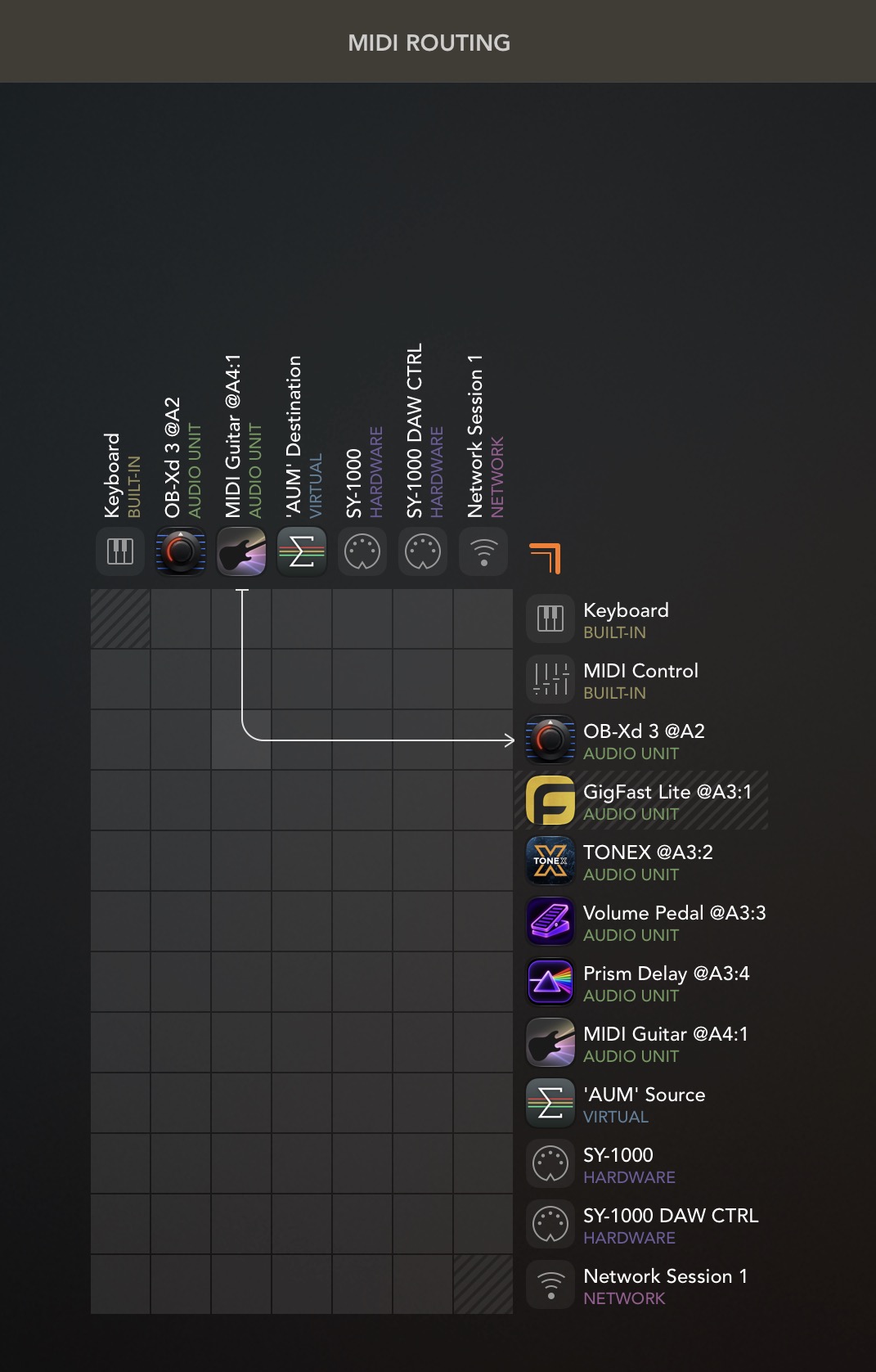
The good news is, it’s all working now and I have both MIDI ports: SY-1000 for general use, and SY-1000 DAW CTRL for editor connection.
re: the usb implementation - i meant on the device side. cpu-heavy sy-1000 presets (like alt-tuning ones) were more likely to glitch when the boss tone studio was active.
that matrix looks sharp! congrats on getting it all working.
There’s definitely a lot of SysEx traffic over USB and that has presented some challenges along the way for the SY-1000 Control Center app.
That matrix is the AUM MIDI routing grid. AUM is my go-to audio-MIDI host on iPadOS. It’s a beautiful interface.
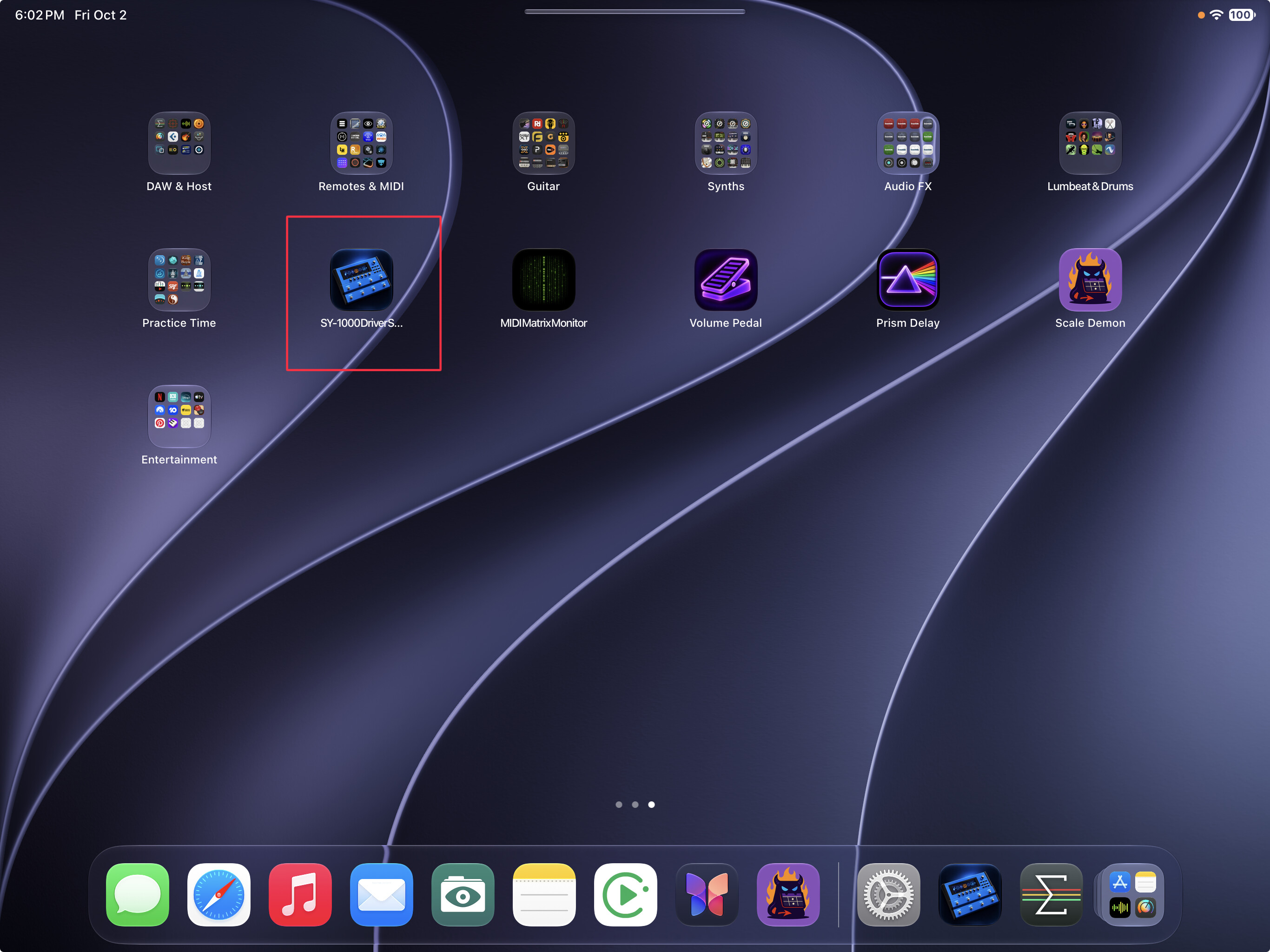
The driver itself is invisible. It will likely be embedded in the SY-1000 Control Center app once I port it to iPad. If Apple won’t approve it (highly possible), then it will only be accessible via a third-party MIDI interface.


 Based on what I’ve read about your product, I think it would still have excellent use cases. Firstly, this driver only works on M-series iPads. Secondly, your hardware should enable direct connection and negate the BOSS hardware requirement. I think they’re both big deals. There are probably more reasons why it would be very useful that I can’t think of right now.