In recent months, I’ve been reflecting on how I really enjoy u-he synthesizers and the Helix Native plug-ins, but don’t use them anywhere nearly as much as I would like to because they just don’t quite fit my preferred workflow.
The problem is, they don’t have standalone versions, and when I just feel like playing, practicing, and experimenting, I don’t want to open up a DAW and play the config game. It steals my inspiration and often winds up in a troubleshooting session that I don’t want. For me, dedicated standalone applications are the simplest way to approach what is already a paralyzing amount of musical choice.
So I set about solving this issue of personal taste in workflow. Plus, I also really needed a bit of a break from the SY-1000 work I’ve been doing…but that’s another story.
The answer(s): Helix Native Host and U-HE Synth Host
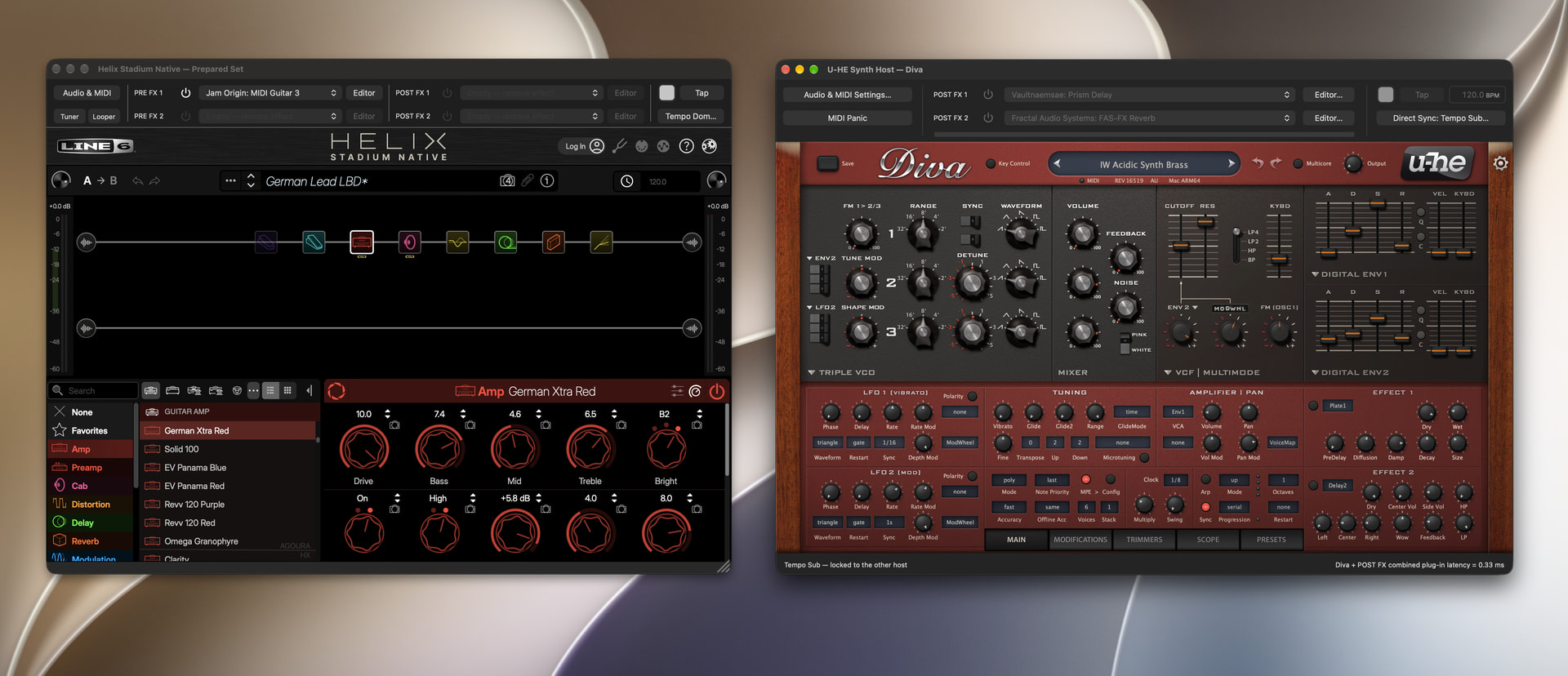
These two applications do exactly what the names state. They function as host applications for specific plug-ins. But they really do so much more: additional third-party effects plug-in loading slots, inter-app MIDI clock synchronization, an unholy amount of MIDI synchronization work to enable integration with the LF+ foot controller, and more. And there’s a lot that goes into the audio and MIDI configuration.
One of the biggest benefits is being able to have MIDI Guitar 3 Hex loaded permanently in the first plug-in slot with D.I. guitar audio pass-through and virtual MIDI activated. I don’t have to think about MG3 anymore. It just works invisibly; Less to think about, easier to play.
The LF+ foot MIDI controller integration is rather personal. I’ve had this controller for such a long time and although we had a difficult relationship to start with, we’ve made friends with one another now. I’ve actually managed to enable and integrate the tuner, looper, and tempo synchronization functions that were originally reserved for the Axe-Fx. That means I have real feedback on the floor controller, which makes it even closer to a real Helix than ever before. I’ve implemented extensive IA synchronization support so the host and the floor controller are always on the same page. But if this is ever to be released, I can see that this could be limiting, and so I’m already considering how to apply the same high level of integration with different controllers, for example, the Morningstar MC8.
Especially for Helix Native, the host app actually fixes problems introduced by Line 6’s feature omissions in Helix Stadium Native: no MIDI PC support, no MIDI access to the tuner, and no looper. No problem; I’ve built a system that loads multiple instances of the plug-in and assigns program changes to each of them for gapless switching. Even the floor unit doesn’t do that! And I’ve added a dedicated MIDI launchable tuner and looper. And of course, the host application supports both the Stadium and the legacy versions of the Helix Native plug-in.
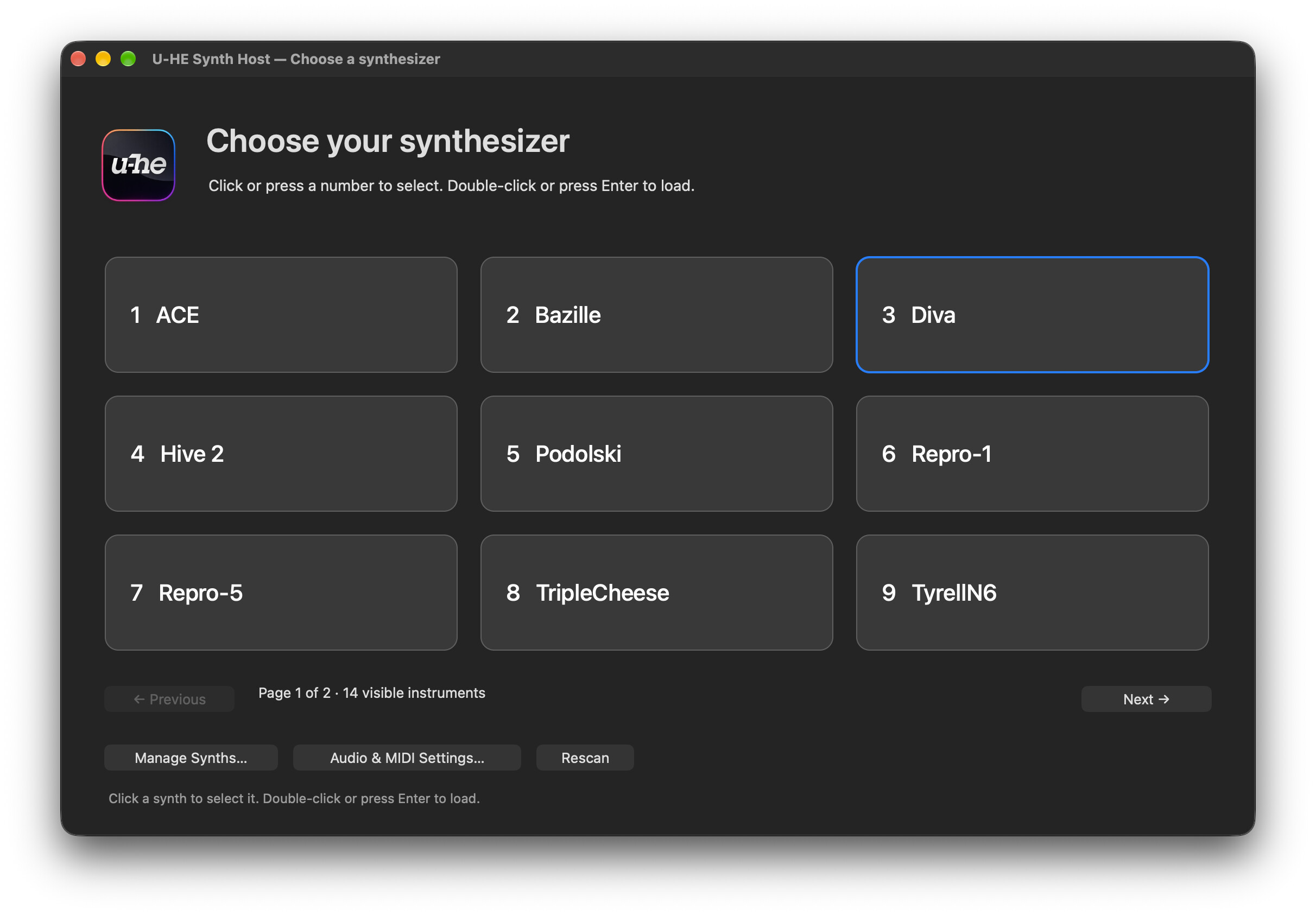
If you’re a fan of u-he synths, the u-he Synth Host application puts all the u-he plug-ins at your fingertips at startup, then drops you into a true u-he standalone experience. For me, it’s a dream come true.
In the last week that I’ve been test-driving and tweaking them, I feel more comfortable than I’ve ever felt using any DAW or host, and finally, the plug-ins that I really love are actually getting used much more frequently.
Importantly, these products don’t infringe on anybody’s IP; they wrap useful features around the plug-ins in much the same way as a DAW or host does, but with far less fuss for the user.
Is this approach something that interests you as guitar synthesists? As is often the case when I start working on products, I’m not really exactly sure where the work will end or if they might have life beyond my own studio. I’d love any feedback you might have. If there is sufficient interest, I could make a demo video of them in action.