I am using the latest bets 3.0.55. How do I completely silence the dry guitar audio into the interface.
I saw an older post reference to the mixer, but the mixer, but the interface looks different. I am sending this via VST to Reaper. I don’t want to hear the actual guitar at all.
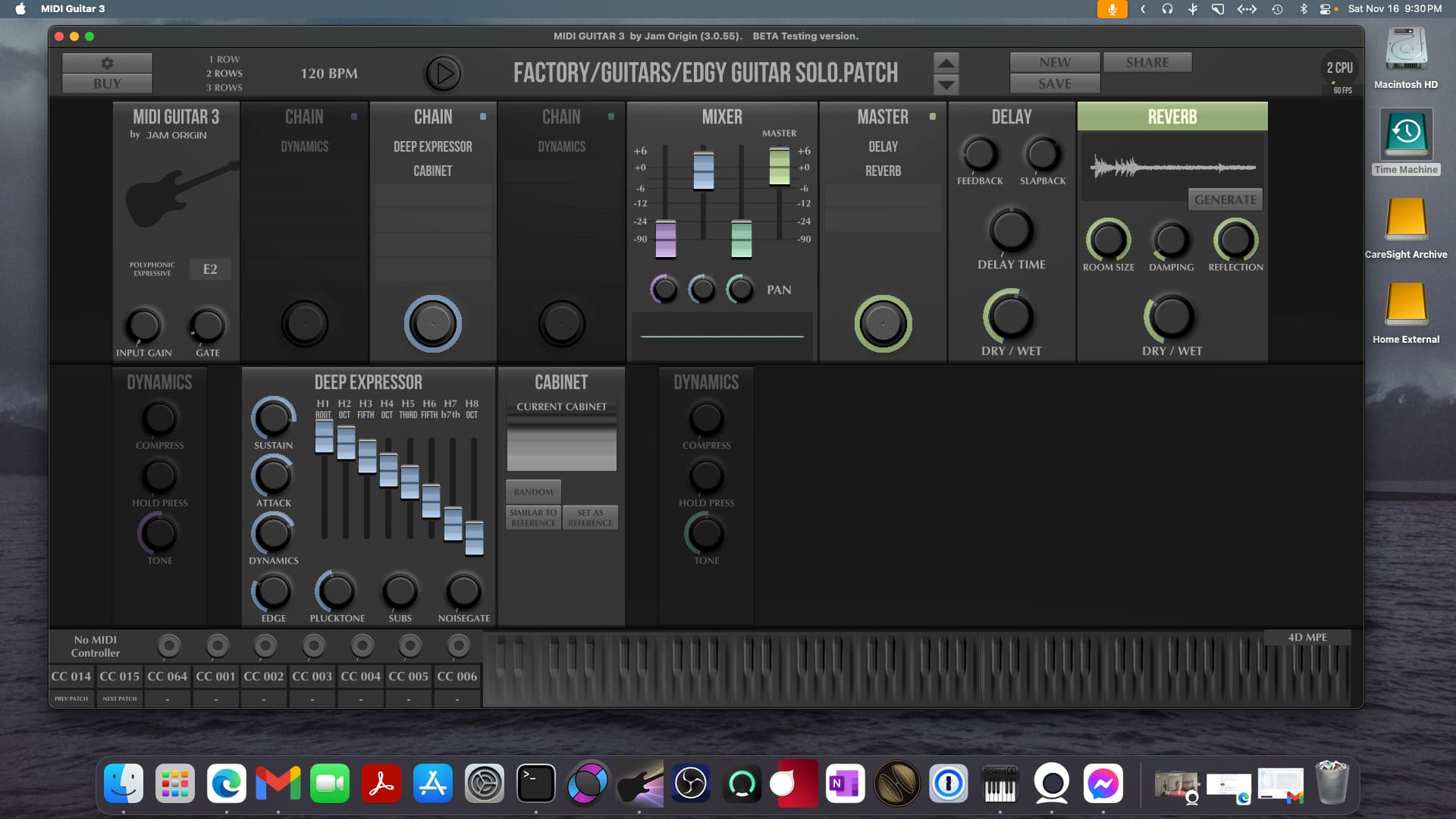
I think it has something to do with the direct monitoring mix on your audio interface rather than MG3. I can’t hear any dry guitar when I play that preset.
As the author of the patch I can confirm what @Vaultnaemsae wrote.
Most of (if not all) audio cards have a Mix knob that mixes direct monitoring from Guitar input and audio coming from PC/MAC . It should be placed in a position where only the audio coming from Computer / DAW is heard. Every audio card has its own settings.
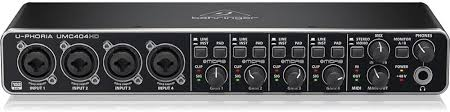
Mine for example is this :
Note the Mix Knob upper right. When used with MG3 it has to be all to the right (Computer monitoring only)
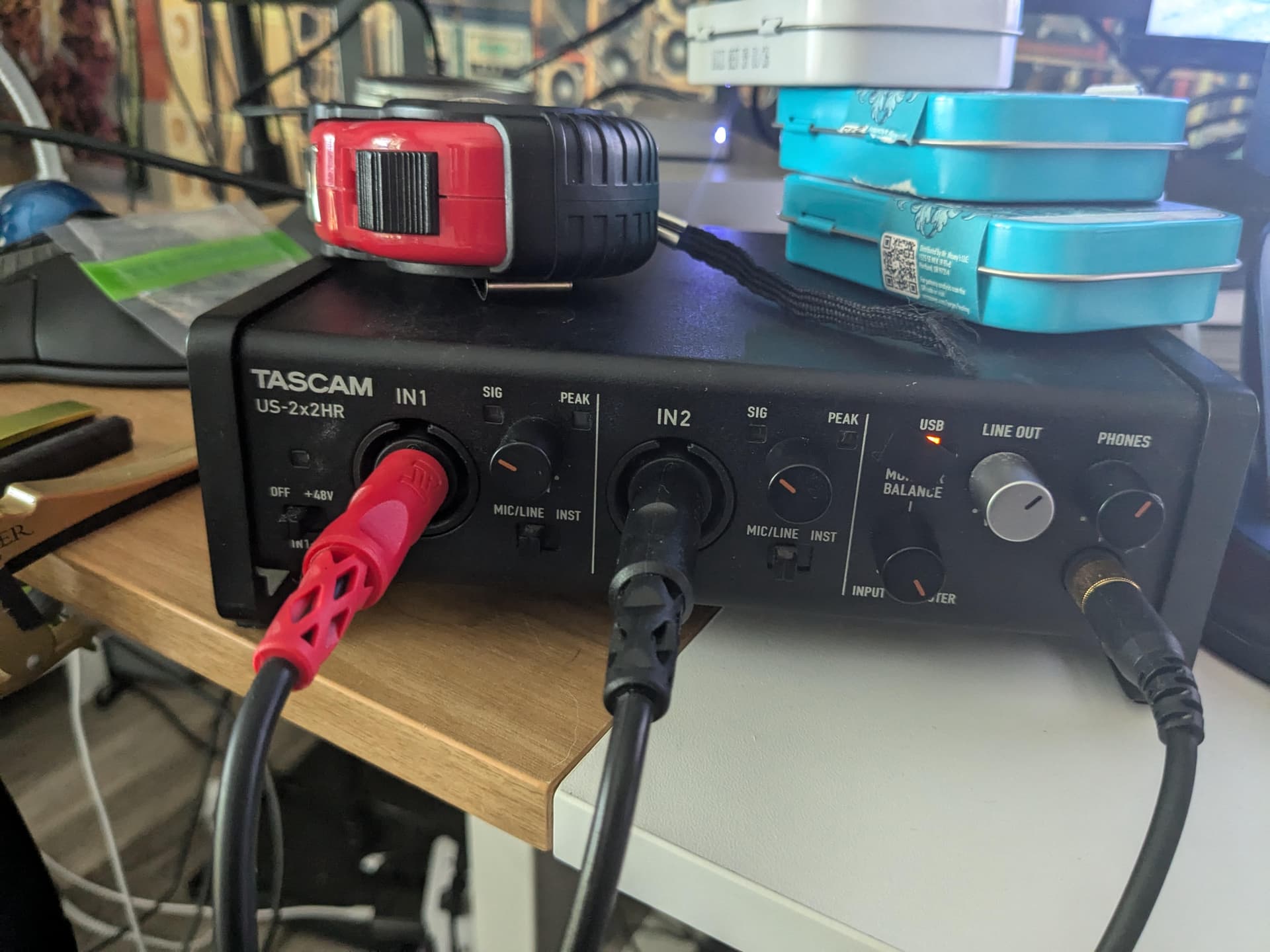
I took my time to explore Tascam Website and found nothing I could use to help.
However it seems you are using the stereo input of your card.
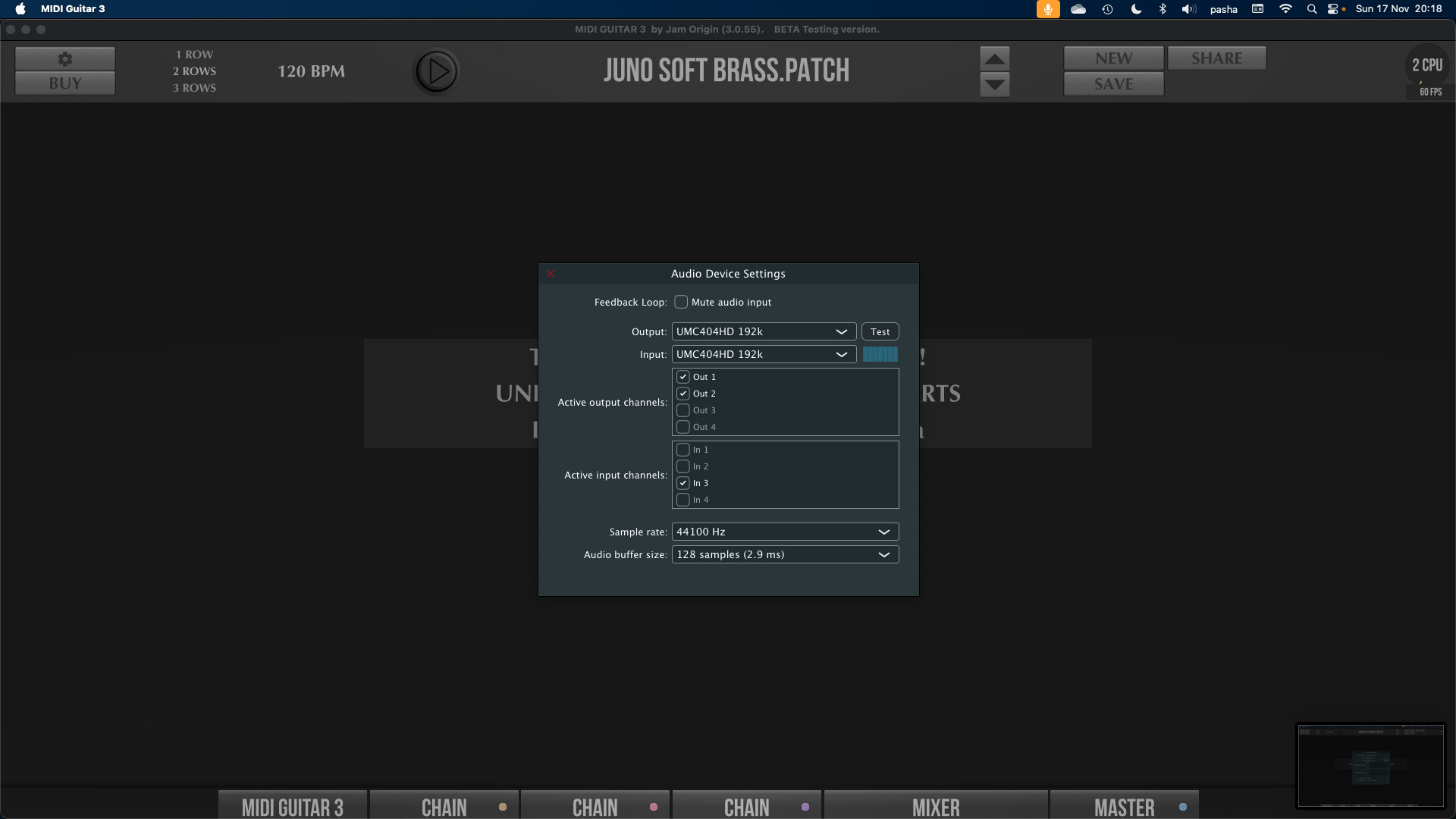
So the Audio Settings in MG3 should reflect that. In the settings of the audio card you can try Mute Audio input. There might be some feedback loop.
Try also to input your guitar directly in the audio card and see what happens.
I’m also struggling to mute the direct guitar sound when using midi-guitar-3. I’m using a Fender Mustang Headphone amp as my USB interface for my iPad. I’ve tried everything that I can thing of and I’m stumped. Any ideas?
"Mustang Micro can be used as an input device for digital recording software by using a USB cable to connect the USB-C jack (H) on the bottom of the unit to the USB port on the user’s Mac or PC.
Note that Mustang Micro can only be used as a source for USB audio (which cannot be routed back to Mustang Micro for monitoring)."
This confirms my initial assessment (after watching a couple of videos on how to use this device’s USB function) that it’s not intended to be used as a monitor; only as an input source.
Anyway, this will be an issue for iOS users because iOS does not support different audio input and output sources. The only exception is that some apps (e.g. AUM) enable you to use the iOS devices speakers as a separate output source form the input source.
If you are using the Fender device with macOS, you can have multiple audio devices connected: the Fender Mustang headphone amp for input and another audio monitoring device for output, which would effectively enable you to use your DAW/host to control what is appearing at the final audio output.
I’m not sure if this helps but the “Fender Mustang Micro Plus features bi-directional (two-way) USB audio” this is the one that I’m using and is an upgrade from the non-plus version.
I’m looking for a way to ‘not’ hear my direct guitar sound while using midi-guitar-3. I would like to do this as simply as possible. Hopefully with out leaving midi-guitar-3. Also, I need to have a battery powered solution. (I’m busking where there are no outlets)
@henkdawson, I suspect, based on this video, that this is a limitation of this particular device.
The video reviewer suggests you could use a clean preamp tone, but even that isn’t ideal as far as I’m concerned.
I re-read The Mustang Micro Plus manual and it indicates it can be used over USB for recording, but it does not mention any option to mute its own direct guitar/amp sound, choose dry versus processed USB audio, disable direct monitoring, or route USB return audio separately from the local guitar path. I already mentioned the implications of this on iOS.
For comparison, I use an IK Multimedia iRig HD 2 on iOS, and that does give me the kind of monitoring/routing option you are looking for. So this is not really an MG3 limitation, and it is not simply “impossible on iOS” either. It all depends on whether the interface itself provides the necessary monitoring/routing behaviour.
If the Mustang Micro Plus always monitors its own guitar/amp sound through its headphone output, MG3 cannot mute that. MG3 can mute its own audio output, but it cannot control an internal monitoring path inside the Fender device.